BitcoinWorld Can Someone Buy Crypto in India Without KYC? There is no legal way to buy crypto with Indian rupees without completing KYC in 2026. Every platform that lets Indian users exchange INR for crypto is classified as a reporting entity under the Prevention of Money Laundering Act, and identity verification is not optional for …
BitcoinWorld
Can Someone Buy Crypto in India Without KYC?
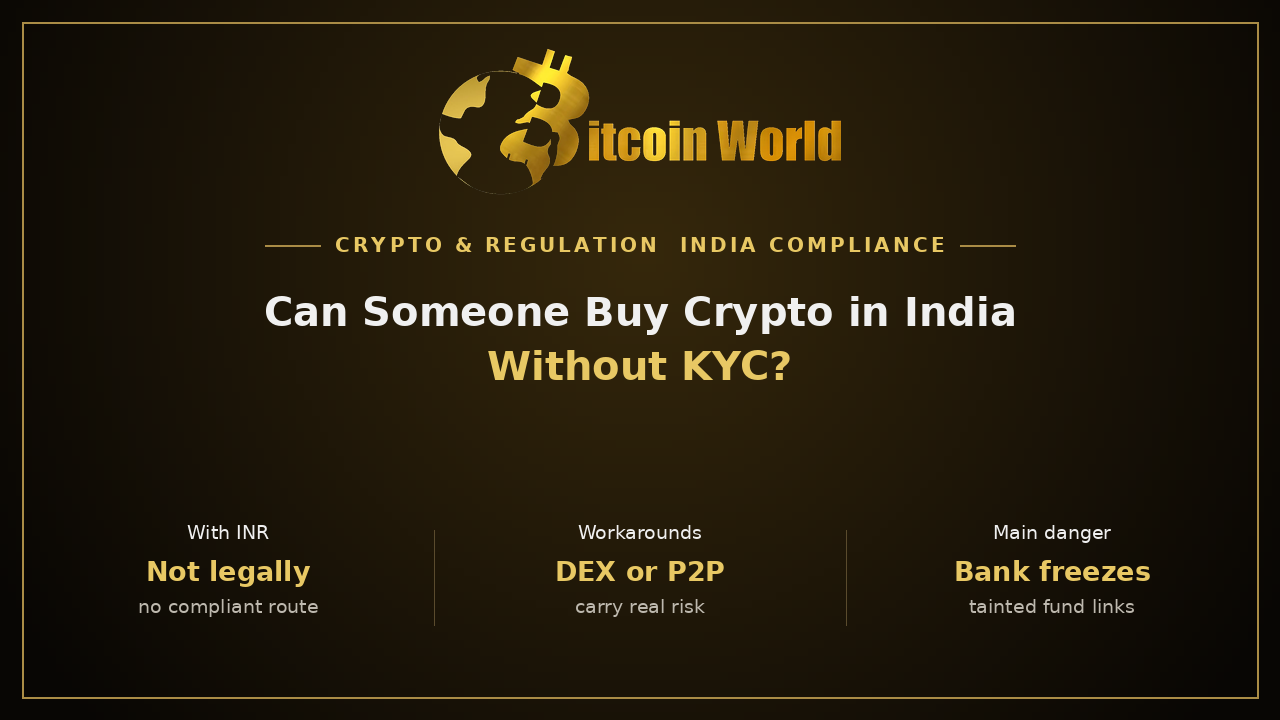
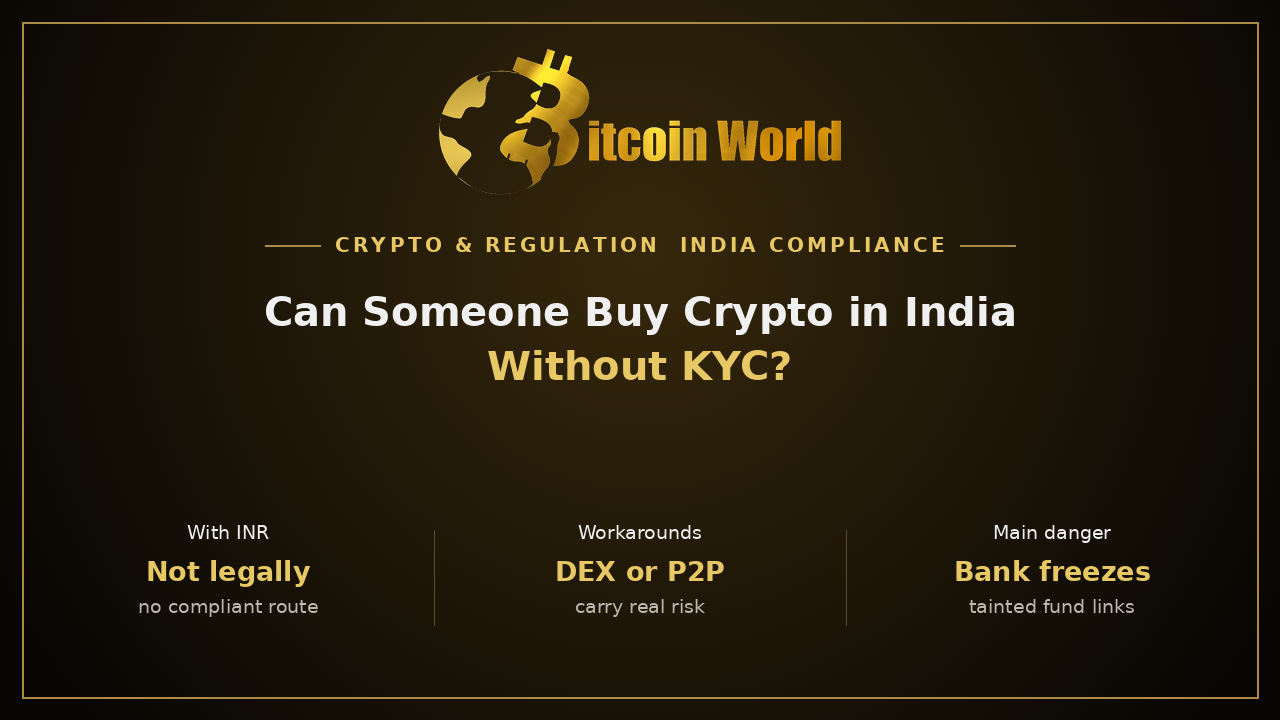
There is no legal way to buy crypto with Indian rupees without completing KYC in 2026. Every platform that lets Indian users exchange INR for crypto is classified as a reporting entity under the Prevention of Money Laundering Act, and identity verification is not optional for any of them. What does exist are decentralized exchanges, peer-to-peer marketplaces, and offshore platforms that skip identity checks entirely, but each of these comes with real legal exposure and financial risk that most people underestimate. This article explains the legal position clearly and walks through what actually happens when someone tries to avoid KYC.
Is Buying Crypto Without KYC Actually Legal in India?
No, not if rupees are involved. Owning and holding crypto is legal in India, but every service that lets you convert INR into crypto or back again must verify your identity.
- The legal basis: Under the PMLA, any Virtual Digital Asset Service Provider serving Indian users, whether an exchange, a broker, or a wallet service, is required to complete KYC on every customer, regardless of where the platform is incorporated.
- No minimum transaction exemption: Unlike some other countries, India applies the Travel Rule and KYC requirements with no minimum threshold, meaning even small transactions are subject to identity verification on compliant platforms.
- Holding crypto in a personal wallet is different: Self-custody wallets like MetaMask or a hardware wallet do not require KYC to set up, since no exchange service is involved. But any gains you eventually realize from assets held this way remain fully taxable at 30%, and moving funds between a personal wallet and any KYC-verified platform will surface your activity anyway.
What Workarounds Do People Actually Use, and Do They Avoid KYC?
A few methods are commonly discussed online, and it’s worth understanding what each one actually involves.
- Peer-to-peer trading: Some P2P platforms and informal Telegram or WhatsApp groups arrange direct INR transfers between individuals in exchange for crypto, without either party going through formal exchange KYC.
- Decentralized exchanges: Platforms like Uniswap let you swap tokens using only a self-custody wallet, with no account, email, or identity check required at all. However, DEXs generally do not accept INR directly, so you need crypto to begin with.
- Offshore no-KYC centralized exchanges: Some platforms allow limited trading or withdrawal amounts without identity verification, though these are not FIU-registered and are not legally permitted to serve Indian users for INR transactions.
- The key distinction: Skipping formal exchange KYC is not the same as avoiding all trace of the transaction. P2P transfers still move through the Indian banking system, and blockchain transactions are traceable using forensic tools that Indian authorities and exchanges increasingly rely on.
What Are the Real Risks of Trying to Avoid KYC?
The risks here are financial and legal, not hypothetical.
- Bank account freezes: This is the most common and immediate consequence. If a P2P counterparty’s funds are later found to be linked to fraud or money laundering, the buyer’s bank account can be frozen during the investigation, even if the buyer had no knowledge of the issue.
- No recourse if something goes wrong: Non-compliant platforms have no legal entity operating in India and no obligation to resolve disputes. If an offshore no-KYC exchange shuts down, freezes your funds, or turns out to be fraudulent, there is no regulator or court in India you can turn to.
- Phishing risk: Many sites advertising “no KYC” crypto purchases are designed specifically to harvest wallet keys or banking credentials rather than to actually sell crypto.
- Tax exposure does not disappear: Skipping KYC does not exempt you from the 30% tax on gains. Every crypto profit is taxable income regardless of which platform or method was used to acquire the asset, and failing to report it is tax evasion, a separate offense from any KYC issue.
- P2P tax obligations shift to the buyer: On platforms where no exchange intermediary deducts TDS, the Indian buyer is legally responsible for deducting and depositing the 1% TDS themselves and filing the associated paperwork, adding a compliance burden most casual users are unaware of.
- Regulatory scrutiny is active, not theoretical: FIU-IND has already issued blocking orders against multiple unregistered offshore platforms, and enforcement data suggests a large share of crypto-related fraud cases traced back to unregistered or non-KYC platforms.
What Should You Do Instead?
If the goal is a fast, low-friction way to buy crypto, a compliant platform is usually the better path, not a slower one.
- Use an FIU-registered exchange: Domestic platforms with UPI support can complete KYC and process a first deposit within minutes once your documents are ready, which is often faster overall than the friction and risk involved in an informal P2P arrangement.
- If you do use P2P, complete KYC anyway: Most reputable P2P platforms, even those with lighter verification requirements than centralized exchanges, still offer a KYC option. Completing it reduces your own legal exposure even where it is not strictly forced on you.
- Keep records regardless of method: Whatever platform or method you use, keep a log of dates, amounts, counterparties, and INR values, since this protects you both for tax filing and in case of any future dispute or investigation.
Frequently Asked Questions
Can I buy crypto in India using UPI without completing KYC?
No. Full exchange KYC, including PAN, a second ID, and bank linkage, is required before any INR deposit, including UPI, can be processed on a legitimate exchange. This requirement cannot be bypassed on any FIU-registered platform.
Are decentralized exchanges a legal way to avoid KYC in India?
Using a DEX itself does not require KYC and is not illegal, since no Indian entity is directly facilitating the trade. However, DEXs typically do not accept INR, and any gains realized from DEX activity are still fully taxable at 30% under Indian law. The tax obligation exists independently of which platform you used.
What happens if my bank account gets frozen because of a P2P crypto trade?
If a counterparty’s funds are later linked to fraud or money laundering, your account can be frozen while cybercrime authorities investigate, even if you were an unknowing, good-faith buyer. Resolving a freeze typically requires cooperating with the investigation and can take significant time, which is one of the most cited reasons to avoid informal P2P arrangements with unverified counterparties.
Conclusion: Not Legally Possible, and Not Worth the Risk
There is no compliant way to buy crypto with INR in India without completing KYC, and the workarounds people search for, P2P trades, DEXs, and offshore no-KYC platforms, either don’t actually let you spend rupees directly or expose you to bank account freezes, phishing, and legal risk with no recourse if something goes wrong. The tax obligation on any gains exists regardless of how the crypto was acquired, so the practical outcome of trying to avoid KYC is usually more risk for no real benefit. A fully KYC-compliant exchange remains the fastest and safest route to actually owning crypto in India today.
This post Can Someone Buy Crypto in India Without KYC? first appeared on BitcoinWorld.